Academic Excellence and Intellectual Pursuit
Dr. Kumar's academic journey reflects a sustained engagement with literature, society and the larger questions of human existence. He earned his Doctor of Philosophy (Ph.D.) in English Literature with a research study entitled “Gynocritical Discussion on the Selected Novels of Anita Nair.” His doctoral research engages with gynocriticism, feminist literary discourse, gender studies and contemporary Indian English literature.
He is recognised as the first Ph.D. scholar to be awarded a doctoral degree by RKDF University, Jharkhand, marking a significant chapter in the academic history of the institution.
He completed his Five-Year Integrated Master's Degree in English from the Central University of Jharkhand. His interdisciplinary academic pursuits were further enriched through a Certificate Course in Media and International Relations, for which he undertook the dissertation “Strategic Relations between India and Nepal.”
His intellectual interests therefore extend beyond the boundaries of a single discipline, embracing literature, education, international relations, governance, human rights, law, public policy, leadership and social sciences.
For Dr. Kumar, scholarship is not confined to classrooms or libraries. It is a means of understanding society, questioning injustice, preserving human values and imagining a more enlightened future.
Institution Building: From Ideas to Institutions
Perhaps one of the most defining dimensions of Dr. Kumar's journey is his commitment to institution building.
He has contributed to the establishment and development of institutions and initiatives dedicated to education, research, leadership, human rights, literature, vocational learning and community development, including:
- National Human Rights and Crime Control Bureau (NHRCCB)
- Naman International Foundation for Education and Social Research (NIFESR)
- Indian Institute of Leadership, Policy & Governance (IILPG)
- International Council for Arts and Literature (ICAL)
- Naman International School, Remba
- Dineshwar Verma College for Higher and Vocational Education
These initiatives reflect his conviction that meaningful social change requires institutions capable of nurturing knowledge, character, leadership and opportunity.
His institution-building philosophy moves beyond infrastructure and administration. It seeks to create intellectual and social ecosystems in which students can learn, researchers can explore, young people can lead, writers can express, and communities can participate in their own development.
Author, Researcher and Literary Contributor
Dr. Kumar's relationship with literature is both academic and deeply personal. As an author, researcher, editor and literary contributor, he has written books, research papers, scholarly articles, policy-oriented writings and educational material addressing questions of literature, education, human rights, law, governance, leadership, gender and society.
His writings frequently explore the relationship between the individual and society, knowledge and responsibility, rights and justice, education and transformation.
He has also contributed to the culture of academic publishing by editing journals, conference proceedings, educational magazines and research publications.
Among his notable academic initiatives was the founding of Naman, regarded as the first student academic journal of the Central University of Jharkhand. As its Founding Chief Editor, he created a platform through which students and young scholars could give expression to their academic ideas and research.
He also launched Shiksha Varta, an educational newspaper focusing on educational reform, higher education, public policy, institutional development and youth empowerment.
His literary and scholarly pursuits reflect a belief that the written word possesses a power beyond expression—it can preserve memory, question convention, awaken conscience and inspire change.
Human Rights and Constitutional Values
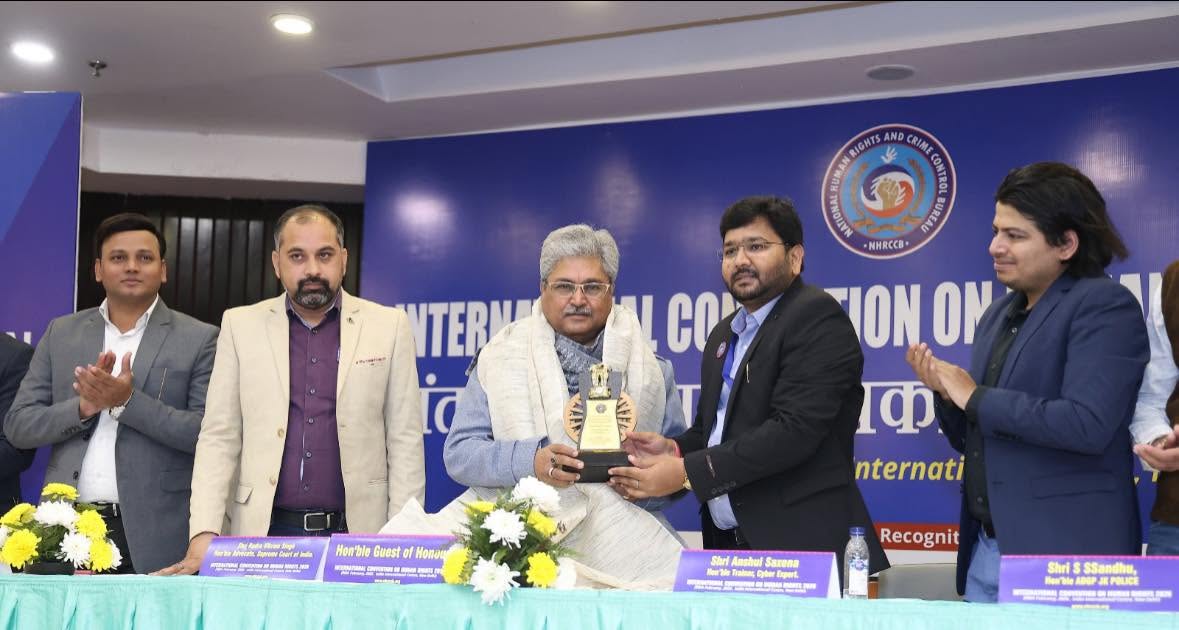
As National President of the National Human Rights and Crime Control Bureau (NHRCCB), Dr. Kumar has worked to promote awareness of constitutional values, human rights and social responsibility.
His engagements have encompassed human rights education, legal awareness, women's empowerment, child protection, anti-human trafficking awareness, environmental consciousness, social justice and community outreach.
Under his leadership, NHRCCB has organised and supported International Conventions, National Conferences, State Conventions, Human Rights Summits, academic seminars, legal awareness programmes, leadership initiatives, research workshops and capacity-building programmes.
These platforms have brought together people from diverse fields—including judges, policymakers, parliamentarians, administrators, police officials, academicians, lawyers, researchers, journalists and civil society representatives—to deliberate upon issues affecting society and the nation.
For Dr. Kumar, human rights are not merely legal provisions; they are an expression of human dignity and the foundation upon which a just society must stand.
Public Interest and Institutional Advocacy
Dr. Kumar has consistently used institutional and constitutional mechanisms to raise matters of public interest. Over the years, he has submitted petitions, representations, memoranda and complaints before various constitutional, statutory and governmental authorities, including the President of India, Prime Minister's Office, Union Ministries, National Human Rights Commission, National Commission for Protection of Child Rights, National Commission for Women, Governors, Chief Ministers, Chief Secretaries, Directors General of Police and educational institutions.
His interventions have addressed areas including educational reform, human rights, women's and children's rights, anti-human trafficking, rural education, transparency, public accountability, constitutional governance, social justice and community welfare.
Where authorities have taken cognizance or action in response, these interventions have contributed to administrative consideration, institutional responses and corrective measures.
His approach to advocacy is grounded in the constitutional idea that responsible citizenship includes the courage to raise questions through lawful and democratic institutions.
International Engagement and Representation
Dr. Kumar's academic and social engagements have also taken him beyond India's borders.
He participated as a representative associated with UNESCO India at the United Nations Conference in Hanoi, Vietnam, where he engaged in discussions concerning education, leadership, sustainable development, youth empowerment, international cooperation and human rights.
At the international forum, he presented perspectives on India's educational transformation under the National Education Policy (NEP 2020), highlighted the contemporary relevance of the Indian Knowledge System, and emphasised the importance of human rights in rural education.
He also drew attention to India's rich tribal heritage and invoked the historical legacies of Emperor Ashoka and Chhatrapati Shivaji Maharaj in discussions surrounding ethical leadership, governance, peace and cultural heritage.
His international engagement reflects his broader endeavour to place India's educational, cultural and civilisational perspectives within contemporary global conversations.
Academic Leadership and Intellectual Engagement
Dr. Kumar has been invited by universities, government institutions, educational organisations and professional bodies to serve in diverse academic and intellectual capacities, including Chief Guest, Keynote Speaker, Guest Faculty, Visiting Faculty, Resource Person, Expert Lecturer, Session Chair, Jury Member, Conference Convener and Guest of Honour.
He has participated in academic and public programmes addressing literature, education, leadership, human rights, governance, youth development and social transformation.
He has also served as a resource person in programmes associated with the National Human Rights Commission, Government of India, and the National Commission for Women, Government of India, including academic and consultative programmes concerning human rights and women's rights.
Through lectures and academic engagements, he continues to advocate an education that connects knowledge with responsibility and intellectual development with social consciousness.
Awards, Honours and Recognition
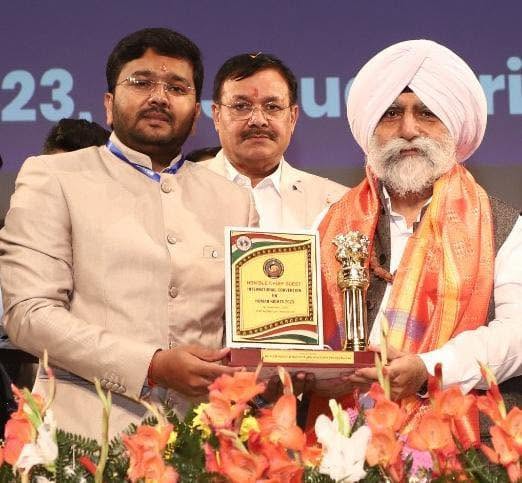
Dr. Kumar's contributions to education, social service, leadership and institution building have received recognition at State, National and International levels.
Among his notable honours are:
- Honorary Doctorate: Conferred in Bengaluru at the age of 23, in recognition of his contribution to educational empowerment and the promotion of quality education among tribal and backward communities of Jharkhand.
- National Education Award – 2017: Recognising pioneering initiatives in skill development and educational innovation in the tribal rural areas through the Naman Foundation.
- Jharkhand Nagrik Samman – 2016: Presented on the occasion of the 16th Foundation Day of Jharkhand for social service and youth leadership.
- Young India Fellowship Campus Ambassador (2016–17): Ashoka University, recognising his leadership potential and commitment to academic and social excellence.
In addition to these recognitions, he has received numerous State, National and International awards, fellowships, certificates of appreciation and institutional honours for contributions associated with education, research, literature, institution building, human rights, leadership, youth empowerment, rural development, governance and community service.
A Life Beyond Positions
The deeper significance of Dr. Randhir Kumar's journey cannot be measured solely by the number of awards he has received, institutions he has founded, conferences he has addressed or positions he has occupied.
Its real measure lies in the ideas he has nurtured, the institutions he has helped create, the young minds he has encouraged, the platforms he has built for others, and the causes to which he has lent his voice.
His journey represents an enduring belief that knowledge acquires meaning when it serves humanity; leadership acquires dignity when it creates opportunities for others; and education becomes transformative when it produces not merely successful individuals, but responsible human beings.
From the pages of literature to the corridors of higher education, from classrooms and research forums to human rights platforms, and from local community initiatives to international engagements, his work reflects a continuous search for a more educated, equitable, ethical and humane society.
A Vision for the Future
Dr. Kumar's continuing mission is to build institutions that stand at the intersection of education, research, constitutional values, ethical leadership, human rights, innovation and social responsibility.
He envisions educational and intellectual institutions that are locally rooted yet globally connected; institutions that preserve cultural heritage while embracing innovation; institutions that empower young people not merely to seek employment, but to become creators, thinkers, leaders and responsible citizens.
His larger aspiration is to contribute to nation-building and global cooperation through education, scholarship, leadership and social action, while advancing the broader ideals embodied in the United Nations Sustainable Development Goals.
For him, achievement is not the destination. It is the responsibility that follows achievement. And perhaps the most enduring chapter of his journey is still being written.